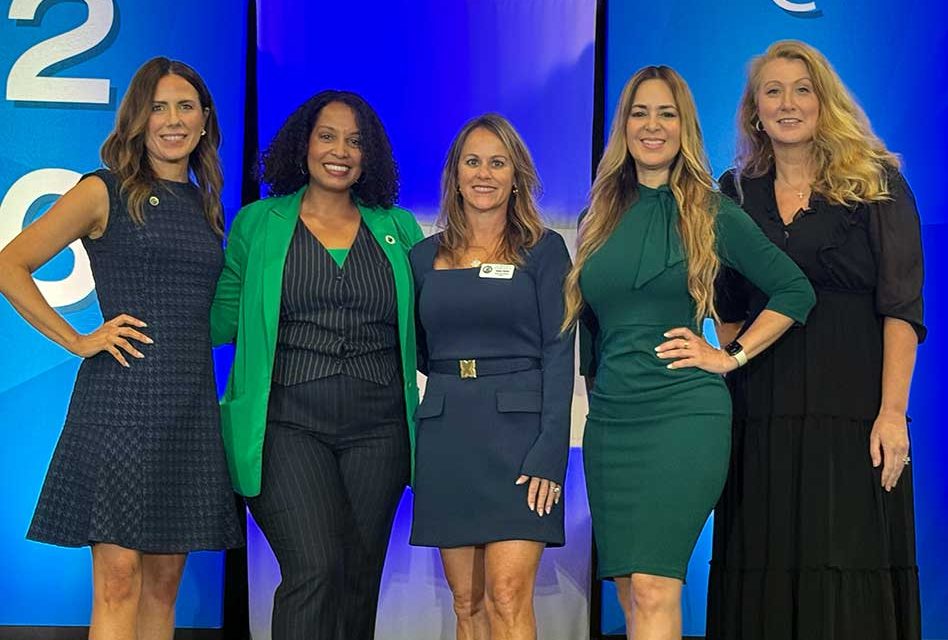
KISSIMMEE, Fla. — The School District of Osceola County celebrated a year of significant achievements, addressed ongoing challenges, and shared an ambitious vision for the future during its annual 2026 State of Education event Wednesday morning, October 14, at Osceola Heritage Park.
Led by Osceola County School Board Chair Heather Kahoun and Superintendent Dr. Mark Shanoff, the annual gathering brought together more than 400 community partners, business leaders, educators, and local officials to reflect on the district’s progress, recognize the work taking place throughout its schools, and discuss the priorities shaping the future of education in Osceola County.
With the district on the cusp of achieving an overall A grade, the morning’s presentation highlighted the collective efforts of teachers, administrators, support staff, students, and families who continue working to strengthen educational opportunities across the county.
The event also provided an opportunity for district leadership to address important financial challenges, including the upcoming November 3 election, when voters will consider a proposed one-mill increase in the district’s operational property tax rate. The measure, if approved, would provide additional funding to support educators, maintain school safety, and preserve academic and extracurricular opportunities for students.
Celebrating Progress and Building for the Future
For School Board Chair Heather Kahoun, the State of Education serves as an important opportunity to bring the community together, celebrate accomplishments, and reinforce the district’s commitment to student success.
“This event brings together more than 400 community partners and business leaders to showcase the great things that are happening right here in Osceola County,” Kahoun told Positively Osceola following Wednesday’s event.
Kahoun emphasized that the annual gathering also provides an opportunity to highlight the district’s strategic plan, including the five pillars guiding its priorities and long-term vision.
The presentation reinforced the importance of collaboration among educators, families, businesses, and community organizations in creating opportunities for students and preparing them for success beyond graduation.
School Board Members Highlight District Achievements and Prepare for Leadership Transitions
Wednesday’s State of Education also provided an opportunity for all five Osceola County School Board members to highlight accomplishments taking place throughout their respective districts.
During the presentation, each board member addressed attendees following a video showcasing schools, programs, and achievements within the district they represent.
Participating board members included District 1 representative Terry Castillo, District 2 representative Bethzaida Garcia, District 3 representative Jolene Sheive, District 4 representative and Board Chair Heather Kahoun, and District 5 representative Paula Bronson.
The morning also marked one of the final State of Education events for two current board members as the district prepares to welcome newly elected representatives.
District 1 Board Member Terry Castillo will be leaving the School Board, with her seat to be filled by newly elected Greg Filak. District 3 Board Member Jolene Sheive will also be departing, with newly elected Alyssa Noel preparing to assume that position.
The upcoming transitions represent a new chapter in the district’s leadership as the School Board continues its work supporting student achievement, strengthening educational opportunities, and addressing the challenges facing Osceola County’s schools.
Together, the presentations reflected the district’s commitment to celebrating successes across all five school board districts while maintaining a shared vision for the future of education in Osceola County.
Superintendent Shanoff Recognizes the District’s 8,000 Team Members
Superintendent Dr. Mark Shanoff expressed enthusiasm about the district’s accomplishments and the opportunities ahead, while recognizing the thousands of employees whose dedication continues to drive progress in Osceola County schools.
Speaking with Positively Osceola during Wednesday’s event, Shanoff reflected on the importance of both celebrating accomplishments and preparing for the future.
“It continues to be a privilege to lead this amazing team of 8,000 folks that really are doing the best work, the most transformative work that we have in our community, which is educating our students,” Shanoff said.
The superintendent emphasized that the State of Education was designed not only to recognize progress already made but also to share where the district sees itself heading in the years ahead.
The district’s continued academic improvement reflects a commitment to raising expectations, expanding opportunities, and helping students achieve their full potential.
Academic Success Reaches New Heights
Among the district’s most encouraging accomplishments is its graduation rate, which has climbed to 93%, exceeding Florida’s statewide average of 92%.
The milestone represents meaningful progress for a district serving a growing and diverse community, while also underscoring the importance of continuing to improve educational outcomes for every student.
With the district approaching an overall A grade, its leadership remains focused on sustaining academic improvement while addressing challenges that could affect future progress.
Addressing Financial Challenges While Protecting Student Opportunities
While Wednesday’s State of Education highlighted academic accomplishments, district leadership also emphasized the importance of addressing financial pressures that could affect the quality and availability of educational services.
According to the district’s official operational millage fact sheet, Osceola currently ranks as the second-lowest-funded school district in Florida. The district also has the fourth-lowest average teacher salary among 14 Central Florida counties, making it increasingly challenging to compete with neighboring districts in recruiting and retaining qualified educators.
The district anticipates a $100 million budget shortfall over the next four years, driven by rising operating costs, funding increases that have not kept pace with inflation, and declining student enrollment.
Over the past four years, enrollment has decreased by more than 1,450 students, resulting in approximately $13 million in reduced funding.
District officials report that significant steps have already been taken to address these financial pressures, including eliminating 785 positions across fiscal years 2026 and 2027, reducing salary expenditures by $37.7 million, and cutting approximately $15.9 million from programs and initiatives.
Despite those reductions, the district has drawn down more than $20 million in reserves over the past three years.
District officials also note that Osceola ranks second-lowest in Florida in the percentage of funding spent on administrative expenses, reflecting efforts to direct resources toward classrooms and student services.
November 3 Operational Millage Referendum Could Help Shape the District’s Future
A major focus of the district’s financial outlook is the proposed operational millage referendum that Osceola County voters will consider during the November 3 General Election.
If approved, the additional one-mill property tax would generate an estimated $62.5 million annually at current property values, providing funding specifically for the district’s day-to-day educational operations.
Unlike sales tax revenue designated for capital improvements, operational millage funding can support employee compensation, school safety, and educational programs.
The district has identified three primary priorities for the proposed funding:
- Competitive compensation and benefits: Helping recruit and retain high-quality teachers and staff in an increasingly competitive Central Florida employment market.
- School safety and security: Maintaining School Resource Officers and other essential safety and security personnel on campuses.
- Academic and extracurricular opportunities: Preserving academic programs, music, arts, athletics, and student activities that contribute to a well-rounded education.
Under the district’s proposed allocation, 80% of referendum revenue remaining after legally required charter school distributions and safety and security costs would be directed toward employee compensation and benefits.
The funding would also be shared proportionately with charter schools as required by Florida law. Approximately 25% of the district’s students currently attend charter schools.
The district estimates the referendum would provide approximately $950 in additional funding per student, helping address the gap between state funding and the rising cost of providing educational services.
For homeowners, one mill represents $1 for every $1,000 of taxable property value. A home with a taxable value of $200,000 would generate an additional $200 annually, or approximately $16.67 per month.
If approved, the millage would begin with the 2027–2028 school year and remain in effect for four years, after which voter approval would be required for renewal.
An independent citizen advisory committee would oversee the use of referendum funds to provide accountability and transparency.
What Happens if the Referendum Does Not Pass?
District officials have also outlined the potential consequences if voters do not approve the proposed operational millage.
With an anticipated $100 million budget shortfall over four years and substantial reductions already implemented, the district could face additional difficult financial decisions affecting staffing, compensation, safety, and educational opportunities.
Without the additional revenue, Osceola could find it increasingly difficult to compete with surrounding school districts offering higher compensation to educators and support personnel.
The district could also face challenges maintaining academic and extracurricular programs as costs continue rising for transportation, athletic equipment, musical instruments, uniforms, facility maintenance, and other student activities.
School safety is another important consideration.
The district currently relies on partnerships with local law enforcement agencies to maintain School Resource Officers on campuses. Its fact sheet warns that if a separate statewide property tax reduction measure were approved and affected local government funding, the district’s share of School Resource Officer costs could increase from approximately $5.4 million to $13.9 million.
District officials have identified private armed security as a possible alternative if maintaining the existing School Resource Officer model becomes financially unsustainable, although they emphasize the broader role School Resource Officers play in supporting school communities.
Potential changes in federal education funding present an additional concern. The district’s fact sheet identifies approximately $9.8 million in federal grant funding that could be lost under proposed federal budgets, affecting programs supported through Title I, Title II, Title III, and Title IV.
While the outcome of the referendum remains in voters’ hands, district leaders are working to ensure residents understand the financial challenges facing Osceola schools and the potential impact on students, employees, and educational services.
A Community United Around Student Success
Wednesday’s State of Education also served as a reminder that the future of Osceola County’s schools extends far beyond the classroom.
The gathering highlighted the role of local businesses, community organizations, elected officials, and families in supporting the district’s strategic priorities and helping students prepare for college, careers, and life beyond graduation.
As the School District of Osceola County looks toward another year of opportunity and challenges, its message Wednesday morning was one of progress, collaboration, and determination.
With improving academic performance, a 93% graduation rate, and thousands of dedicated employees working to make a difference every day, district leaders remain focused on building upon their achievements while ensuring students have the resources and support they need to succeed.
The November 3 operational millage referendum represents an important decision for Osceola County residents, one that could influence the district’s ability to maintain services, support educators, and continue advancing educational opportunities for years to come.
For additional information about the district’s strategic plan, accomplishments, and proposed operational millage referendum, visit www.osceolaschools.net.
Distrito Escolar del Condado de Osceola celebra sus logros, enfrenta desafíos y presenta su visión de futuro durante el Estado de la Educación 2026
KISSIMMEE, Florida — El Distrito Escolar del Condado de Osceola celebró sus importantes logros académicos, abordó los desafíos financieros y compartió sus metas para el futuro durante su evento anual Estado de la Educación 2026, realizado el miércoles 14 de octubre en Osceola Heritage Park.
Encabezado por la presidenta de la Junta Escolar, Heather Kahoun, y el superintendente, Dr. Mark Shanoff, el evento reunió a más de 400 líderes comunitarios, representantes empresariales, educadores y funcionarios locales para reconocer los avances del distrito y destacar las prioridades que marcarán el futuro de la educación en Osceola.
Con el distrito cada vez más cerca de alcanzar una calificación general de A, la presentación destacó el compromiso de los maestros, empleados, estudiantes y familias con la excelencia educativa.
Una comunidad comprometida con la educación
“Este evento reúne a más de 400 colaboradores comunitarios y líderes empresariales para mostrar las grandes cosas que están sucediendo aquí mismo, en el Condado de Osceola”, expresó Kahoun durante una entrevista con Positively Osceola.
Los cinco miembros de la Junta Escolar también participaron en la presentación, destacando los logros de sus respectivos distritos mediante videos y mensajes dirigidos a los asistentes.
Participaron Terry Castillo, Distrito 1; Bethzaida Garcia, Distrito 2; Jolene Sheive, Distrito 3; Heather Kahoun, Distrito 4; y Paula Bronson, Distrito 5.
El evento también marcó una de las últimas participaciones de Castillo y Sheive como integrantes de la Junta Escolar. Sus puestos serán ocupados por los recientemente elegidos Greg Filak, en el Distrito 1, y Alyssa Noel, en el Distrito 3.
Por su parte, el superintendente Shanoff reconoció el esfuerzo de los aproximadamente 8,000 empleados del distrito.
“Sigue siendo un privilegio dirigir a este extraordinario equipo de 8,000 personas que realizan una labor verdaderamente transformadora en nuestra comunidad: educar a nuestros estudiantes”, expresó Shanoff a Positively Osceola.
Logros académicos y desafíos financieros
Entre los avances más destacados se encuentra la tasa de graduación del distrito, que alcanzó el 93%, superando el promedio estatal de Florida del 92%.
Sin embargo, el distrito también enfrenta importantes desafíos financieros. Según su hoja informativa oficial, Osceola es el segundo distrito escolar con menor financiamiento del estado y proyecta un déficit presupuestario de $100 millones durante los próximos cuatro años.
Para enfrentar esta situación, el distrito ha eliminado 785 puestos, reducido aproximadamente $15.9 millones en programas e iniciativas y utilizado más de $20 millones de sus reservas durante los últimos tres años.
Referéndum del 3 de noviembre: una decisión importante para las escuelas
Durante el evento también se destacó el referéndum sobre el impuesto operativo escolar que aparecerá en la boleta electoral del 3 de noviembre de 2026.
De aprobarse, el aumento de un mil en la tasa del impuesto sobre la propiedad generaría aproximadamente $62.5 millones anuales, destinados principalmente a mejorar los salarios y beneficios del personal, mantener los oficiales de recursos escolares y preservar programas académicos, deportivos, musicales y artísticos.
El 80% de los ingresos restantes, después de las asignaciones obligatorias para escuelas chárter y los costos de seguridad, se destinaría a compensación y beneficios de los empleados.
Para una vivienda con un valor imponible de $200,000, el impuesto adicional representaría aproximadamente $200 al año, equivalentes a $16.67 mensuales.
De aprobarse, la medida entraría en vigor durante el año escolar 2027-2028 por un período de cuatro años, con supervisión de un comité asesor independiente de ciudadanos.
Si el referéndum no recibe la aprobación de los votantes, el distrito podría enfrentar nuevas decisiones presupuestarias difíciles, incluyendo posibles reducciones adicionales que afectarían la contratación y retención de personal, la seguridad escolar y las oportunidades educativas y extracurriculares.
Construyendo juntos el futuro de la educación
Presentado por AdventHealth, el Estado de la Educación 2026 reafirmó la importancia de la colaboración entre las escuelas, las familias, las empresas y las organizaciones comunitarias.
A pesar de los desafíos, el mensaje del distrito fue de optimismo, compromiso y determinación para continuar avanzando.
Con mejores resultados académicos, una tasa de graduación del 93% y miles de profesionales dedicados a la educación, el Distrito Escolar del Condado de Osceola continúa trabajando para ofrecer a cada estudiante las herramientas y oportunidades necesarias para alcanzar el éxito.
Para más información sobre el distrito y el referéndum del 3 de noviembre, visite www.osceolaschools.net.