Orlando Health Introduces New Device Designed to Improve Detection of Blood Loss During C-Sections
ORLANDO, Fla. — Orlando Health is introducing a newly developed medical device designed to help physicians detect excessive blood loss more quickly during cesarean sections, a breakthrough that could improve safety for mothers during childbirth.
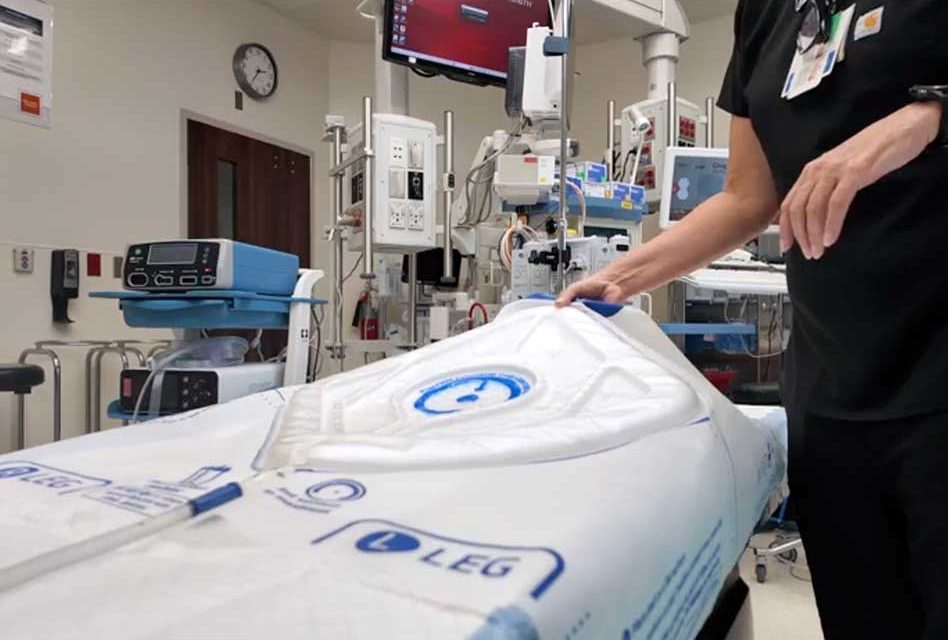
The BleedID Vacuum Pad, developed over six years by Orlando Health maternal-fetal medicine physician Dr. Neeraj Desai and clinical nurse specialist Teresa Lance, is now being used commercially at Orlando Health Winnie Palmer Hospital for Women & Babies. The device is believed to be the first of its kind, using a vacuum-assisted absorbent system to collect and better visualize blood loss during obstetric and gynecological procedures.
Postpartum hemorrhage remains one of the leading causes of serious maternal complications during and after childbirth. Because blood loss can be difficult to accurately measure during a C-section, clinicians often rely on visible signs or changes in a patient’s blood pressure before recognizing a problem.
The BleedID Vacuum Pad is designed to provide care teams with a clearer and more immediate assessment of blood loss, allowing them to identify potential complications earlier and begin treatment sooner.
“Postpartum hemorrhage can develop rapidly and remains one of the leading causes of maternal complications during and after childbirth,” said Dr. Desai. “The BleedID system was developed to help care teams better quantify blood loss during cesarean deliveries, allowing us to identify potential concerns earlier and intervene more quickly when needed.”
According to Orlando Health, cesarean sections are among the most frequently performed surgical procedures in the United States, making improved blood-loss detection an important advancement for maternal care.
The project was developed in collaboration with the Orlando Health Strategic Innovations team, which helps physicians and healthcare professionals transform ideas into practical medical technologies.
“The development of BleedID exemplifies how collaboration between clinicians and our innovation team can accelerate ideas into impactful, real-world tools that improve patient safety and outcomes,” said Riham Hanna, assistant vice president of Orlando Health Strategic Innovations.
The BleedID Vacuum Pad is initially being deployed at Orlando Health Winnie Palmer Hospital, with plans for broader implementation as production expands.
The device has been registered under Aparata Medical, an Orlando Health subsidiary that develops regulated medical devices and is registered with the U.S. Food and Drug Administration as a specification developer.
Founded more than a century ago, Orlando Health is a private, not-for-profit healthcare system serving Florida, Alabama, and Puerto Rico. The organization said it continues to invest in innovations aimed at improving patient care, safety, and health outcomes across its network.
Orlando Health Presenta Nuevo Dispositivo para Detectar Más Rápidamente la Pérdida de Sangre Durante Cesáreas
ORLANDO, Fla. — Orlando Health comenzó a utilizar el BleedID Vacuum Pad, un innovador dispositivo médico diseñado para ayudar a los médicos a detectar con mayor rapidez la pérdida excesiva de sangre durante cesáreas, mejorando la seguridad de las madres durante el parto.
El dispositivo fue desarrollado durante seis años por el Dr. Neeraj Desai, especialista en medicina materno-fetal, y la enfermera clínica Teresa Lance. Utiliza un sistema absorbente asistido por vacío para medir con mayor precisión la pérdida de sangre durante procedimientos obstétricos y ginecológicos.
La hemorragia posparto continúa siendo una de las principales causas de complicaciones maternas graves. Según Orlando Health, BleedID permitirá a los equipos médicos identificar problemas antes e iniciar tratamientos de forma más rápida.
El dispositivo ya se encuentra en uso en el Orlando Health Winnie Palmer Hospital for Women & Babies, con planes de expandir su implementación a más centros médicos en el futuro.